Quick Information

ADDRESS

#Av. de la Constitución, s/n, 41004 Sevilla, Spain

RECOMMENDED DURATION

4 hours

VISITORS PER YEAR

1200000

NUMBER OF ENTRANCES

4

UNESCO YEAR

1987

Plan your visit

Did you know?

Seville Cathedral, the largest Gothic cathedral globally, boasts a unique square floor plan, adapted from the city's former mosque.

La Giralda, the cathedral's bell tower, features ramps, not steps, and has inspired replicas worldwide, including in Kansas City and L'Arboç del Penedés.

Seville Cathedral houses a renowned art gallery, featuring masterpieces by Murillo, Velázquez, Goya, and Zurbarán, including the largest altarpiece in Christendom.

The Seville Cathedral, also known as the Cathedral of Saint Mary of the See, is the world’s largest Gothic cathedral and one of the biggest churches on the planet. It was designated a UNESCO World Heritage Site in 1987, along with the Alcázar of Seville and the General Archive of the Indies. Besides its impressive architecture and palatial scale, it’s also famous for being Christopher Columbus’ final resting place.

Book Seville Cathedral Tickets

Why visit the Seville Cathedral

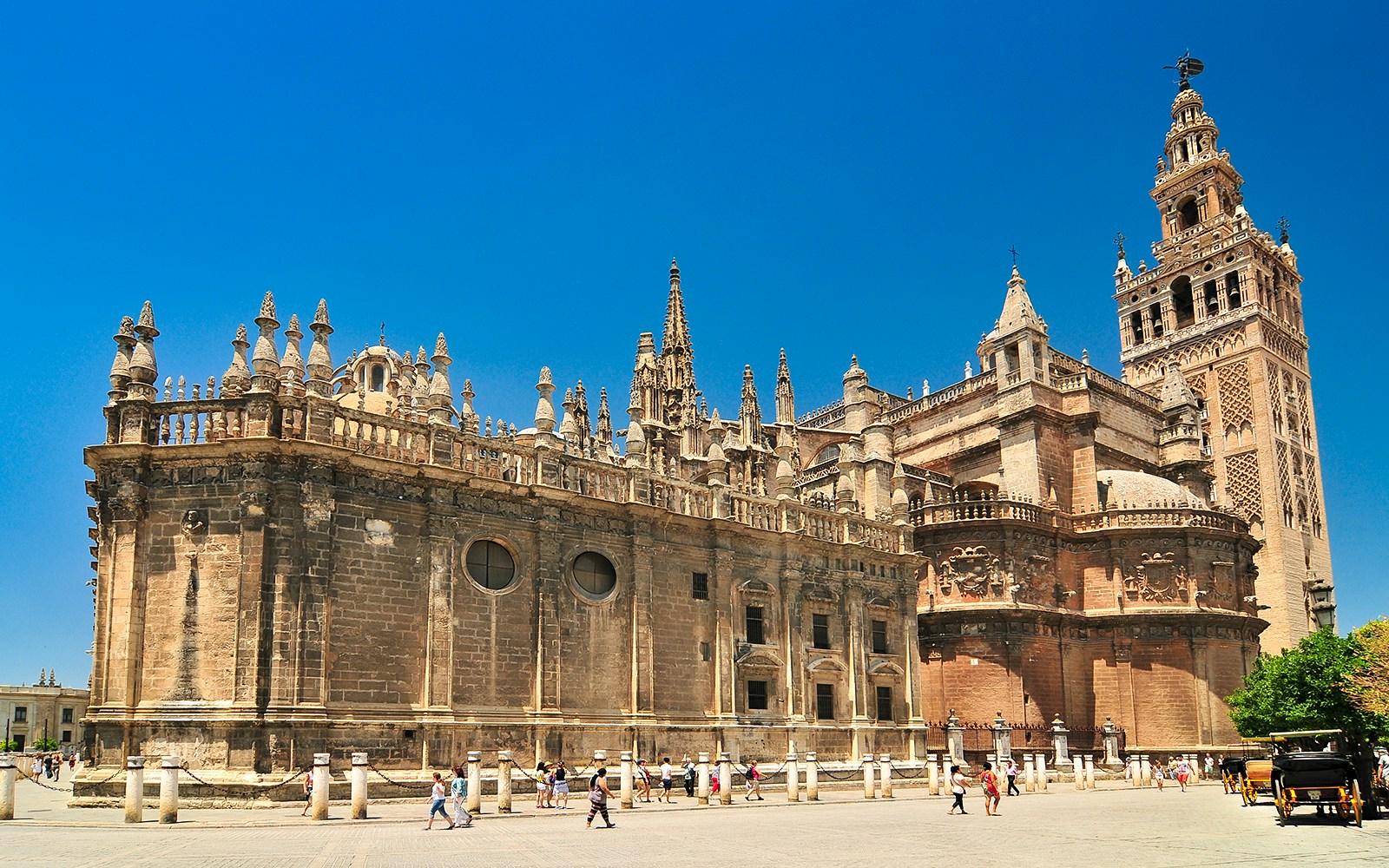
Seville Cathedral and Giralda tower under a clear blue sky, with tourists exploring the plaza.
tomb of Christopher Columbus in seville cathedral
Seville Cathedral's Capilla Mayor with intricate Gothic altar and golden altarpiece.
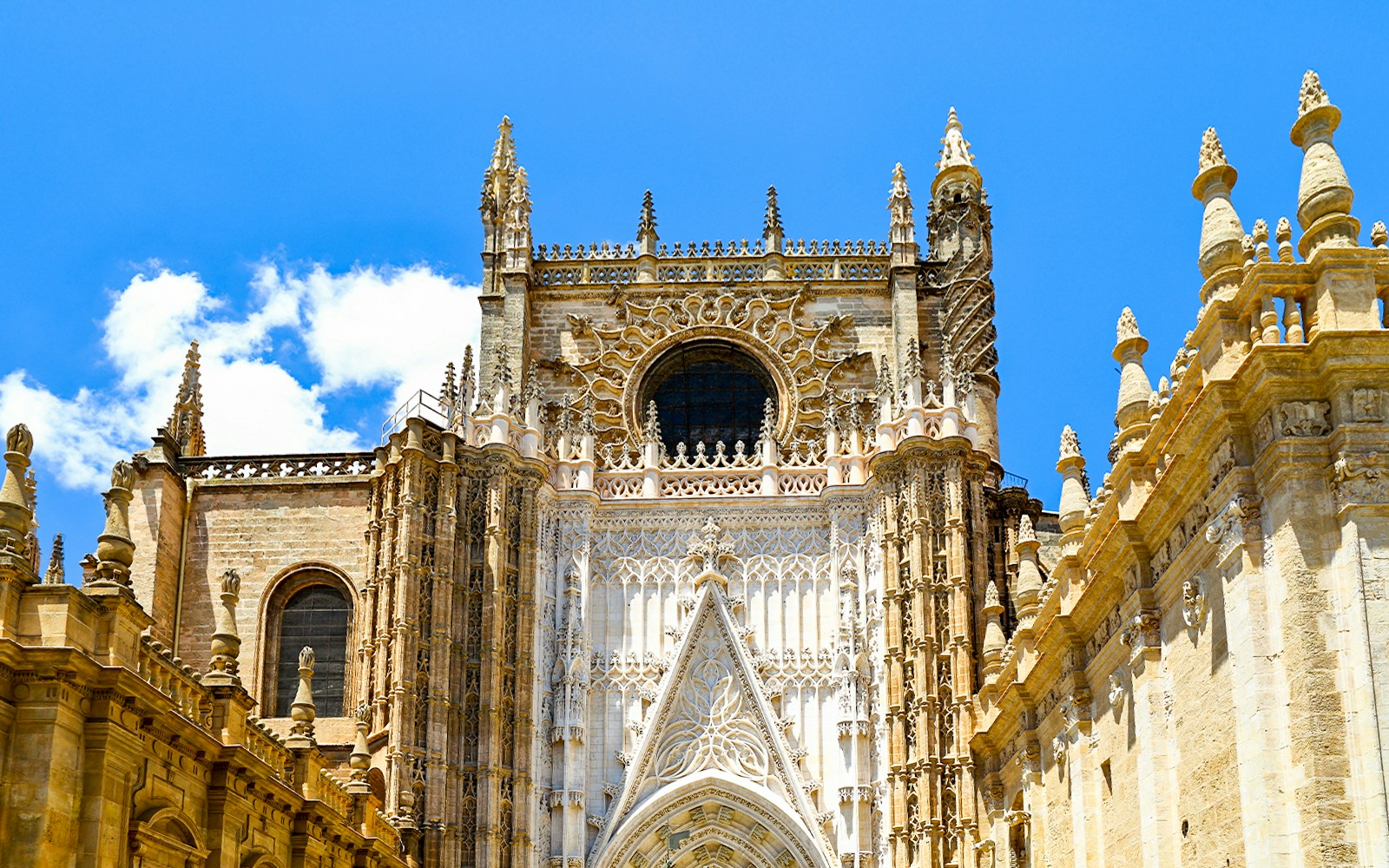
Seville Cathedral facade with intricate Gothic architecture, Spain.
1/4

The world’s largest Gothic Cathedral

Calling the Seville Cathedral “huge” barely does it justice. To put this into perspective, if you laid the cathedral along a city block, it would extend for a full 1.5 blocks, measuring 135 meters in length. The La Giralda (the cathedral’s bell tower) rises as high as a 30-storey building. If this weren’t enough, it can accommodate almost 20,000 people!

Home to Christopher Columbus’ tomb

The Cathedral also houses Christopher Columbus’ tomb, right next to the entrance. While there’s been plenty of speculation about whether the remains truly belong to him, DNA testing has supported this claim. The tomb itself is held aloft by four heraldic figures representing the kingdoms of Castile, León, Aragon, and Navarre.

Home to the largest altarpiece in Christendom

The Retablo Mayor, the cathedral’s towering altarpiece, is an extraordinary, gold-leafed masterwork of Gothic art. It spans 20 meters in height and 18 meters in width, featuring over 40 individual scenes from the life of Christ. It’s no surprise, then, that millions visit the Seville Cathedral every year.

A UNESCO-recognized site

The Seville Cathedral is a designated UNESCO World Heritage Site, recognized in 1987, alongside the neighboring Alcázar of Seville and the General Archive of the Indies. The three monuments together are called the ‘Monuments of Seville’ and are a must-visit given their proximity.

Who built the Seville Cathedral?

The Seville Cathedral’s creation tells a story of bold ambition and collective genius. After Seville fell to King Ferdinand III in 1248, local leaders famously declared, “Let us build a church so beautiful and so grand that those who see it finished will take us for mad.” From 1401, master builders from across Europe, including Ysambert of the Netherlands, Carlín of France, Charles Galter, and Spain’s Juan Gil de Hontañón, joined forces to shape the towering Gothic marvel.

Hundreds of masons, artisans, and townspeople poured their labor and resources, turning Seville into a bustling construction hub for over a century. The result? An architectural marvel whose sweeping vaults, towering Giralda bell tower, and intricate artistry have left an unmatched legacy.

Seville Cathedral History

La Giralda: The cathedral’s soaring bell tower

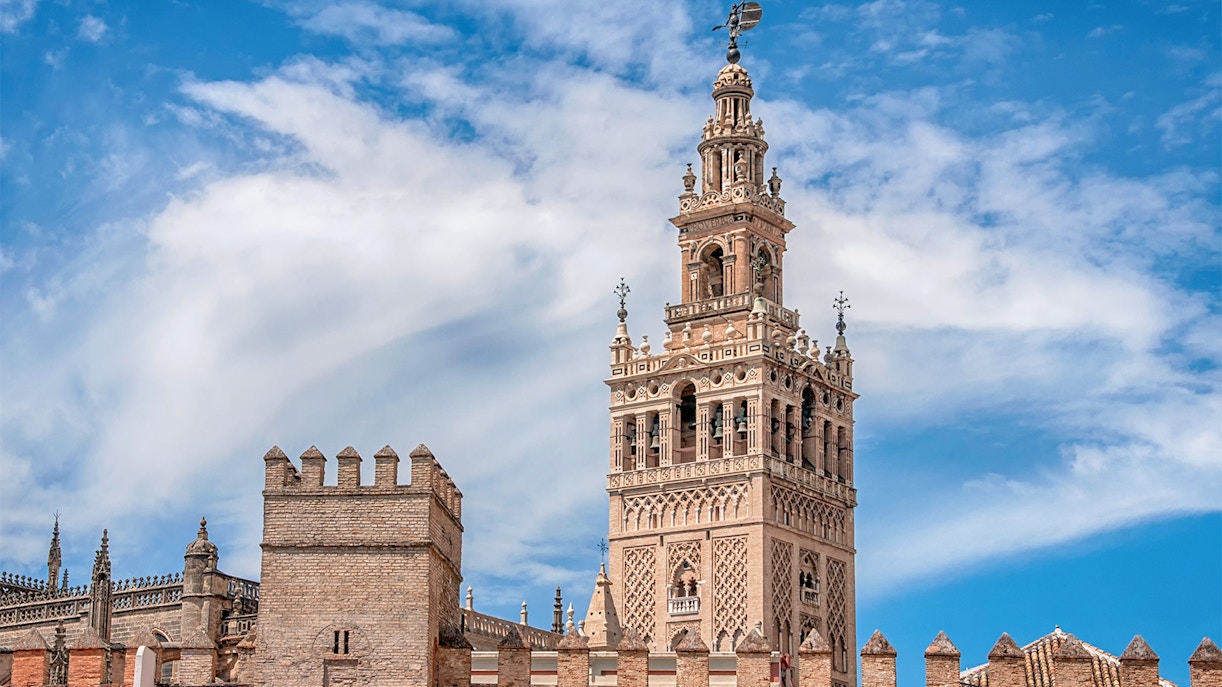
La Giralda bell tower of Seville Cathedral against a clear blue sky.

One of the cathedral’s standout features is the La Giralda—its iconic bell tower, originally built in the 12th century as the minaret of the Great Mosque of Seville. Standing at 104 meters tall, the tower is a stunning blend of Almohad Moorish architecture and Renaissance additions made after the Reconquista.

What makes the Giralda unique is its internal ramp system—34 gently sloping ramps instead of stairs, which allowed muezzins to ascend on horseback to issue the call to prayer. Today, visitors climb the same ramps to reach panoramic viewing platforms with breathtaking views over the city’s rooftops, the Alcázar, and the Guadalquivir River.

Explore the La Giralda

Where is the Seville Cathedral located?

The Seville Cathedral is located in Avenida de la Constitución, s/n, 41004 Sevilla, at the heart of the historic city center. It’s easily accessible on foot from nearby attractions like the Alcázar and Santa Cruz district | Find on Google Maps

You can easily get to the cathedral via public transport, including the bus, metro, and tram.

Seville Cathedral Directions

Frequently asked questions about the Seville Cathedral

The Seville Cathedral was built between 1401 and 1519. It was constructed on the site of the former Almohad mosque, symbolizing the city's reconquest by the Christians in 1248.